
BIOMIN18-GYSM: Success through Perseverance

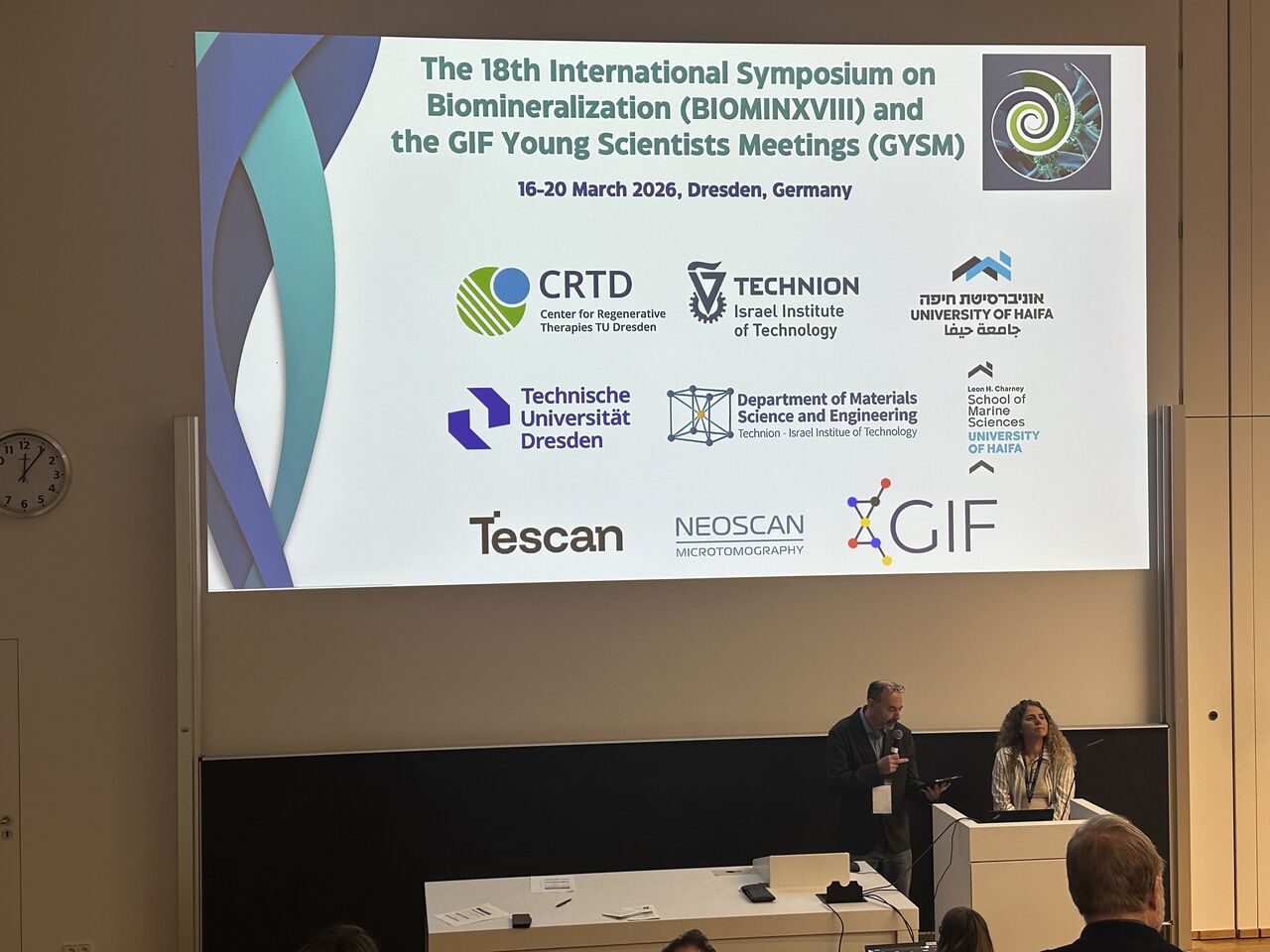
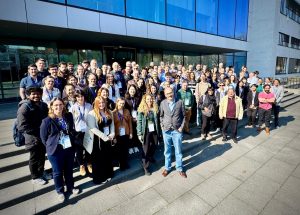
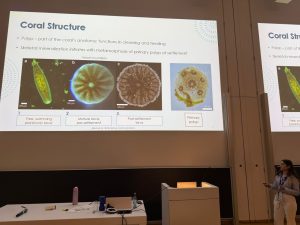
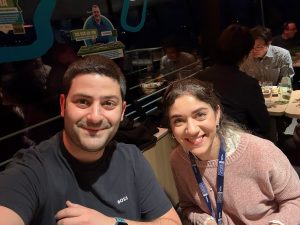
Proud and honored to serve as co-organizer of BIOMIN XVIII Symposium that successfully took place in Dresden after a long and challenging journey! Grateful to all participants worldwide and to the Dresden hosts. Special thanks to our group members for a great contribution!

I am very happy that BIOMIN XVIII successfully took place in Dresden from 16-20 March, 2026.
This conference has been a long journey. It was originally planned to be held in Israel, jointly at the Technion – Israel Institute of Technology and University of Haifa, but had to be postponed several times following the events of October 7th and the challenging period that has followed over the past two and a half years. Despite the ongoing situation and significant travel difficulties, we managed to travel to Dresden and return safely, something we are truly grateful for.
We would like to sincerely thank all participants and presenters for their contributions, especially those who made a long journey to join us from the US, Japan, Canada, Chile, China, and Israel. We also thank the Dresden team for their outstanding hosting and support. Special thanks to Prof. Nils Kröger Kroger, Dr. Igor Zlotnikov, and especially Ms. Sandra Herrmann for their dedication and help in making this meeting possible. And for the CRTD Center for Regenerative Therapies Dresden and B CUBE, TU Dresden for allowing us to use their facilities and lecture halls.
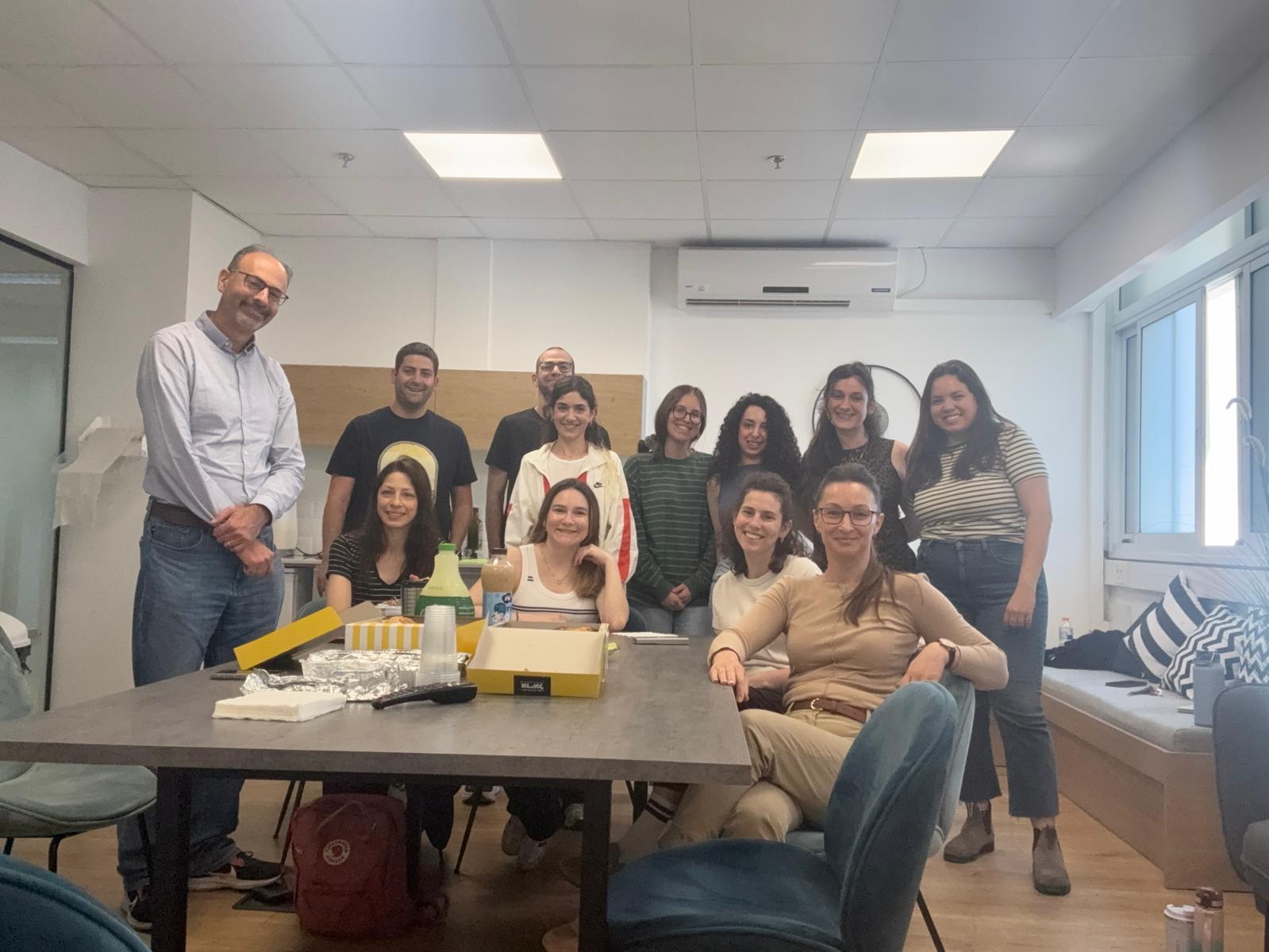
I would also like to express my deep appreciation to my colleague and co-chair, Prof. Tali Mass. It was truly a pleasure sharing this journey and carrying the responsibility together. A big thank you also goes to the conference admin Dr. Iryna Polishchuk and the students and postdocs who helped with many technical issues before and during the conference: Dr. Federica Scucchia, Dr. Katrein Sauer, Ms. Almog Sulam Korovin and Mr. Niv Ben Arie.
We are also grateful to the organizations that supported the meeting: University of Haifa, Technion – Israel Institute of Technology, the Department of Materials Science and Engineering -Technion , German Israeli Foundation for Scientific Research & Development (GIF) (for supporting the Young Scientists Meeting session), Tescan, @Neoscan, Elsevier (via Progress in Materials Science), and Oxford Instruments plc / WITec.
Thank you all for making BIOMIN XVIII such a meaningful and successful meeting.
I am already looking forward to BIOMIN XIX in Poland in 2029.

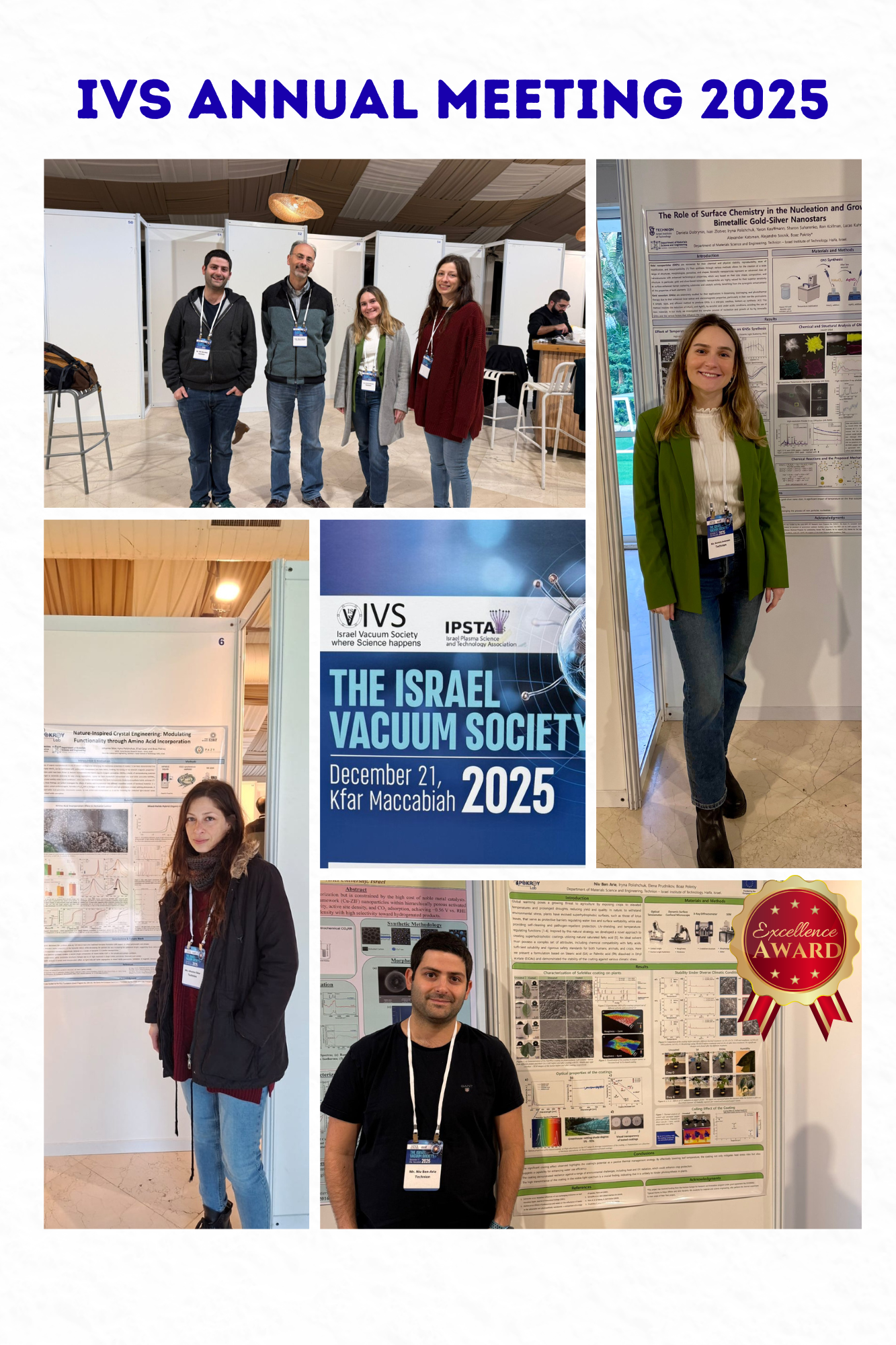
A Winning Day at IVS-IPSTA 2025

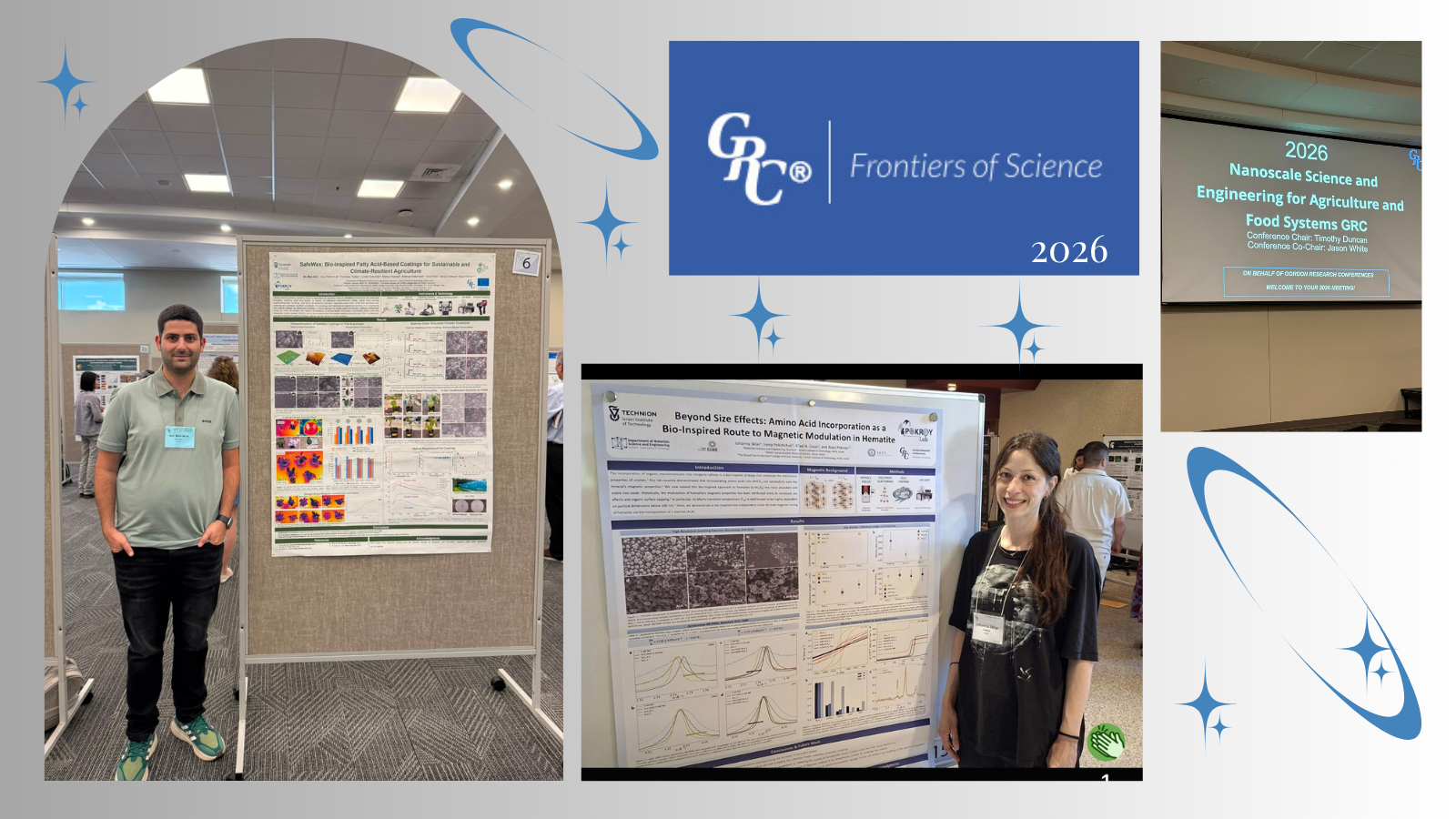
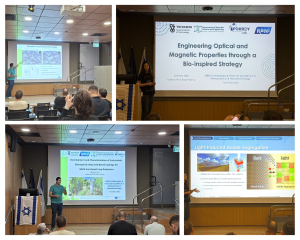
Great day for our group at the IVS-IPSTA 2025 Conference in Kfar Maccabiah!
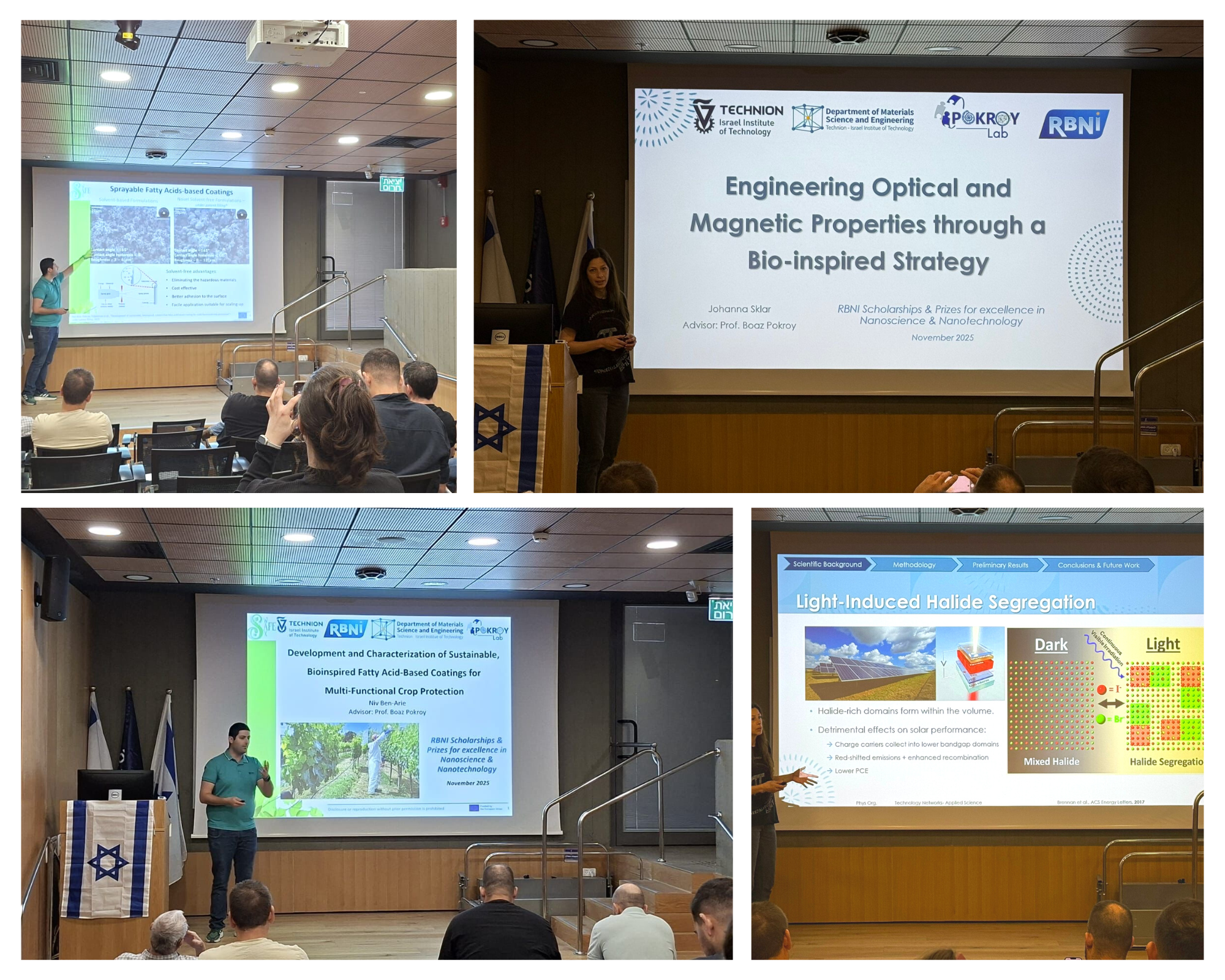
Daniela Dobrynin, Johanna Sklar, Niv Ben-Arie, and Prof. Boaz Pokroy represented our team with excellent presentations.

A special congratulations to Niv Ben-Arie, winner of the Poster Excellence Award!

Proud of our group’s achievements and continued scientific impact.

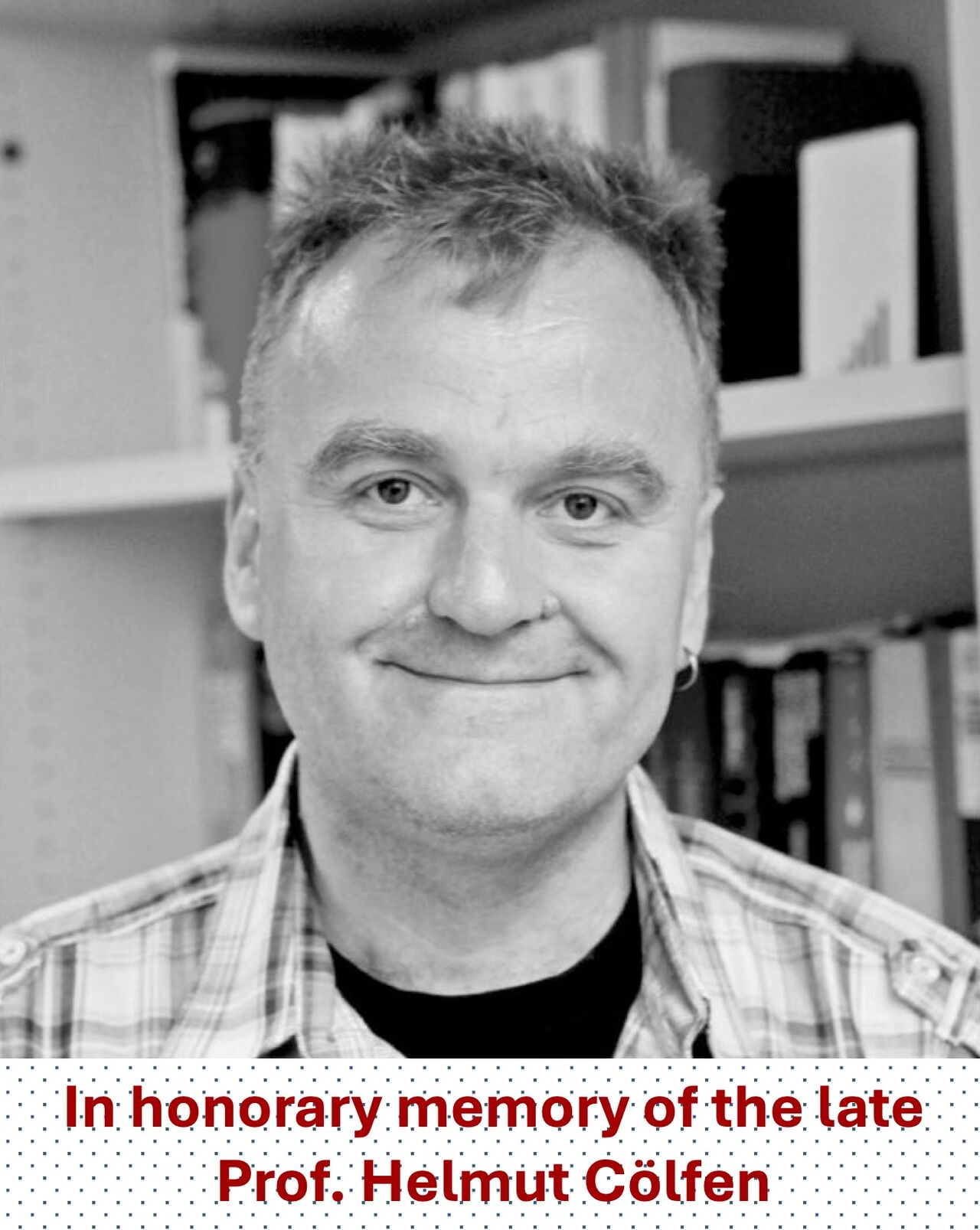
In honorary memory of the late Prof. Helmut Cölfen.

This paper is dedicated to the honorary memory of the late Prof. Helmut Cölfen (University of Konstanz, University of Konstanz, Germany) a brilliant scientist and inspiring mentor whose legacy continues to shape the field of biomineralization. May his memory be blessed.

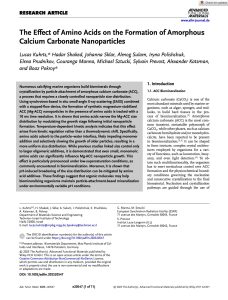
We are thrilled about the publication of our latest paper, “The Effect of Amino Acids on the Formation of Amorphous Calcium Carbonate Nanoparticles”!
Using synchrotron-based in situ SAXS at ESRF – The European Synchrotron – The European Synchrotron (beamline ID02) with an exceptional 10 ms time resolution, we reveal how even small, monomeric amino acids (such as aspartic acid, serine, and valine) regulate the growth kinetics of magnesium-stabilized amorphous calcium carbonate (Mg-ACC) nanoparticles.
We show that amino acids narrow the nanoparticle size distribution by adsorbing at the particle–water interface and selectively slowing the growth of older particles, thereby maintaining uniformity even under fluctuating pH conditions.
These results provide new insight into how biomineralizing organisms may preserve particle-attachment-based mineralization under environmental stress such as ocean acidification
This work was carried out at the Technion – Israel Institute of Technology – Israel Institute of Technology, in the Department of Materials Science and Engineering -Technion of Materials Science and Engineering, in collaboration with ESRF – The European Synchrotron – The European Synchrotron, beamline ID02.
The research was led in my lab by my former Postdoc Lucas Kuhrts and former PhD student Hadar Shaked.
Congratulations to all co-authors:
Lucas Kuhrts, Hadar Shaked, Johanna Sklar, Almog Sulam Korovin, Iryna Polishchuk, Elena Prudnikov, Dr. Gouranga Manna, Michael Sztucki, Sylvain Prévost (ILL – Institut Laue Langevin), and Alex Katsman!


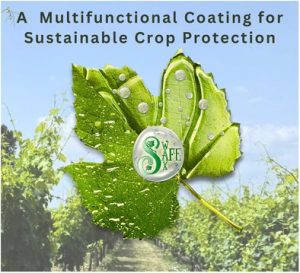
SafeWax concept is published!

SafeWax is the outcome of over a decade of research in our lab on bioinspired superhydrophobic wax coatings. SafeWax specifically is based on natural fatty acids, it is a multifunctional coating that renders plants superhydrophobicity providing passive protection against fungal infections, while simultaneously shielding crops from UV radiation and low humidity. Find out more in an open-access Small publication! Congratulations to all the authors!

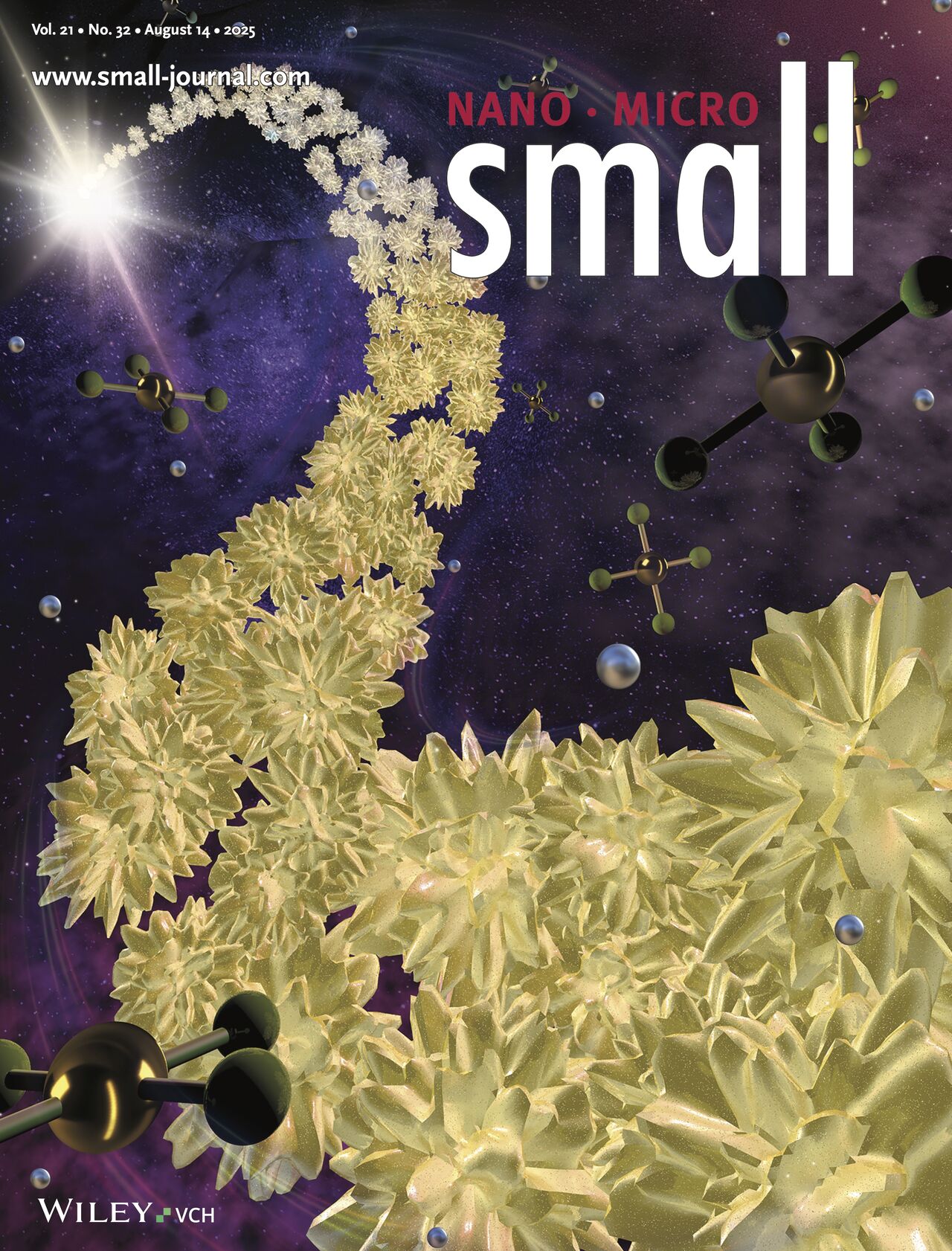
Art of our Science.

The paper by Daniela Dobrynin, our PhD student, has been published in Small and was chosen to be featured as a cover image. This is the outcome of a fruitful collaboration with Prof. Alejandro Sosnik and the coauthors are Dr. Ivan Zlotver, Dr. Iryna Polishchuk, Dr. Yaron Kauffmann, Sharon Suharenko, Ron Koifman, Dr. Lucas Kuhrts, and Dr. Alex Katsman all from the Department of Materials Science and Engineering. Coing

SafeWax Field Trials

Leading the SafeWax project is both a responsibility and a privilege. It was truly exciting to meet all the SafeWax partners and discuss the project’s progress in Bologna. Together, we were fortunate to participate in the field trials at the University of Bologna (Alma Mater Studiorum – Università di Bologna) experimental fields and see SafeWax in action. This lab-to-field transition marks a significant milestone as SafeWax. The experiments are ongoing, and we are now testing the long-term efficacy of SafeWax on grapevines. Many thanks to the University of Bologna (Alma Mater Studiorum – Università di Bologna) team for their dedication and excellent organization in making these trials possible!